


SMAUG #tech-Tech Unveiled: A Dive into the SMAUG Aerial Surveillance and Monitoring technology
The SMAUG project will use various state-of-the-art technologies to improve and enhance the security of ports and their entrance routes. In this regard, Work Package 4 (Underwater detection and location) focuses on underwater detection and location of threatening underwater vehicles, structures, or anomalous devices.
Underwater detection and location will be achieved using four main methods:
Acoustic Detection: A series of hydrophones will capture sounds emitted by small underwater vehicles, which will then be analysed using artificial intelligence techniques.
Rapid Sonar Hull Scanning: This method will be employed to scan ship hulls and perform scans of the harbour floor.
High-Resolution Sonar Inspection: This will be used to inspect objects in water with poor visibility.
Collective Autonomous Location: A swarm of autonomous underwater vehicles will work together to provide extensive detection coverage of the environment.
All these activities will also be complemented by the use of a tethered drone on a vessel, which will enhance visual detection around sea harbours and their entrance routes and piers.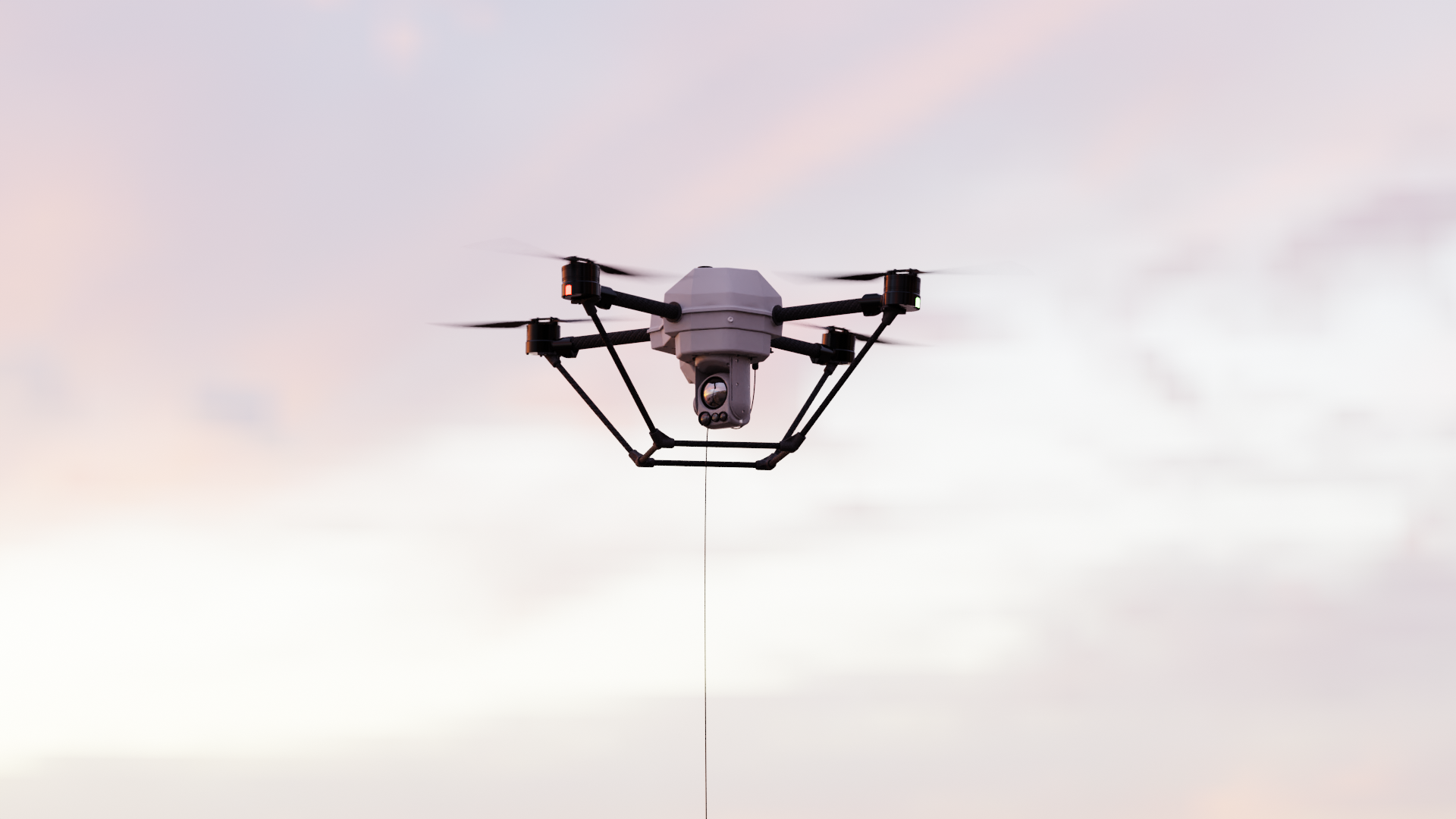
The tethered drone
But how will this drone be tethered, which activities will be implemented, and how will it assist the SMAUG’s mission? Let’s find out everything about SMAUG’s persistent aerial surveillance and monitoring!
Elistair SMAUG’s consortium partner is developing a new generation of tethered drones, mountable on maritime vehicles and has identified a few challenges in this project:
-
- Creating a waterproof box and drone to operate in this wet and salty environment,
-
- Developing a strong architecture to be able to fly and follow the wave movements and to take-off and land in this moving platform,
-
- Developing an integration system capable of delivering enough power supply from the autonomous boat to the tethered drone,
-
- Developing APIs to remotely control the drone and the camera from a C2 situated on land,
-
- Integrating smart imaging analysis to help operators.
The objective is to have a strongly tethered dronebox that can resist 30km/h wind and fly in a GNSS-denied environment. The drone will lift up to 2.5 kg at 90m high and follow the boat in movement. AI functionalities will add another dimension to the system, liberating operators’ time to focus on high-value tasks.
This innovative tethered drone responds to the urgent needs of operators from ports and coast guards. They need to have a continuous view of the entrance routes and smart detection alerts, as well as tracking to detect more threats.
Watch the Khronos Tethered DroneBox in action!
If you are interested in the SMAUG project, stay tuned since more SMAUG technologies will be revealed!
Until then, stay tuned with SMAUG via its social media pages!